What the label tells us
The supplied label lists cranberry extract from Vaccinium macrocarpon berry, standardized to 30% proanthocyanidin, inside the 350 mg herbal blend. The cranberry portion is not separately weighed. A percentage without the corresponding extract weight is insufficient to calculate the amount per capsule.
[label]This matters when you compare research or another product. Two labels can both mention cranberry but provide different information about the material and dose. Do not assume an equal amount simply because the plant name matches.
What the research question actually is
NCCIH summarizes evidence suggesting cranberry products may reduce recurrent UTI risk in some populations, while noting inconsistency and product differences. It does not recommend cranberry as a replacement for treatment of an existing UTI.
[cranberry]The relevance boundary is crucial. A study that counts infection recurrences does not directly measure stress leakage, urgency episodes, or pad use. Marketing language about “urinary health” can obscure those distinctions. Ask what was measured before deciding whether a finding answers your question.
Standardization is useful but incomplete
| Detail | Why it matters |
|---|---|
| Extract weight | Needed to interpret a declared percentage |
| PAC measurement | Study methods and reported values must be comparable |
| Population | A result in one group may not transfer to another |
| Outcome | Infection recurrence and leakage are different |
| Finished formula | A mixture is not identical to cranberry alone |
A claim of standardization does not establish that the finished capsule matches a trial. The blend may include an unspecified cranberry amount, and the other ingredients make the complete product a different intervention.
A careful product decision
Use the label transcription to identify what is known and ask the seller for the missing amount if it affects your decision. Discuss suspected infection symptoms with a healthcare professional rather than waiting for an ingredient to work.
This page does not prescribe cranberry, an extract dose, or a FEMICORE course. It shows how to avoid changing an ingredient finding into a finished-product promise. For the broader formula, continue to FEMICORE ingredients.
Continue your research
References & source notes
- Supplied FEMICORE product label. Accessed September 25, 2026.
- NCCIH: Cranberry — usefulness and safety. Accessed September 25, 2026.
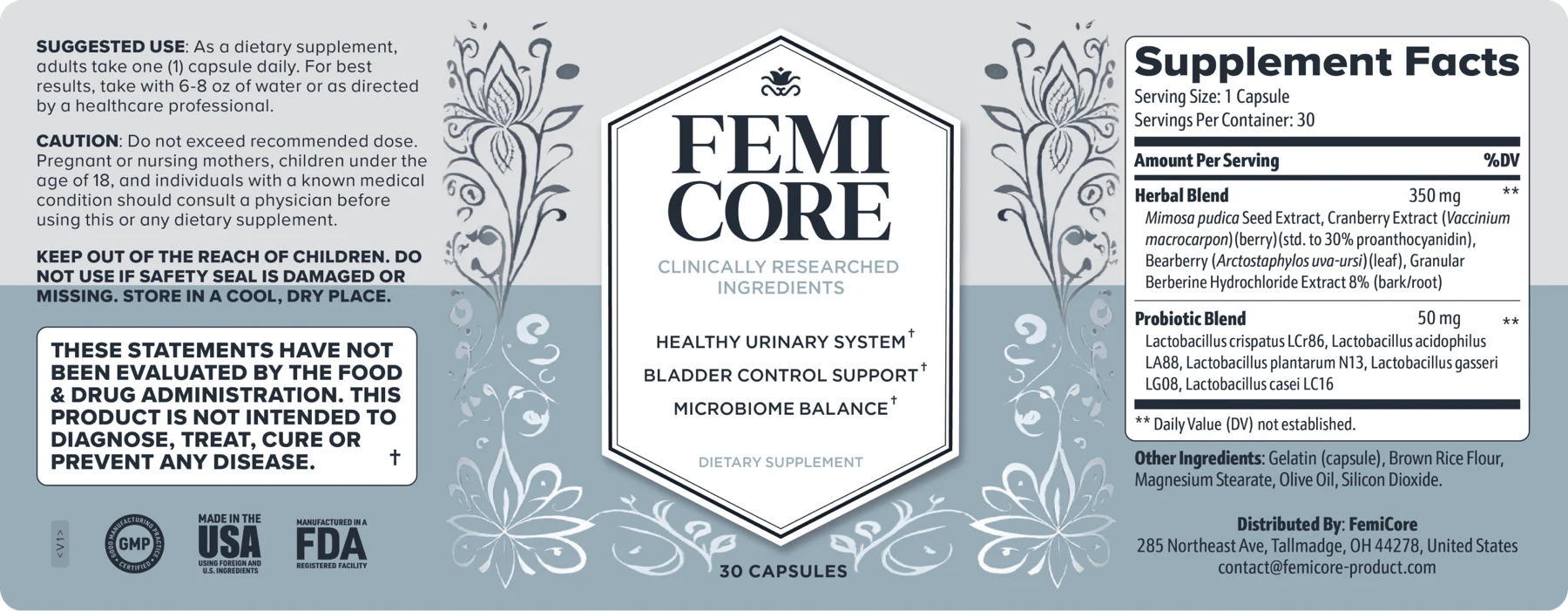
Label information comes from the supplied artwork. Seller claims are not independent clinical evidence. Sources do not imply endorsement of this site or FEMICORE.