Product and commercial sources
- Supplied FEMICORE product label
- FEMICORE seller presentation — seller-reported information
- Seller product-support page
- Seller refund and order-support page
- Seller shipping policy
- ClickBank order support
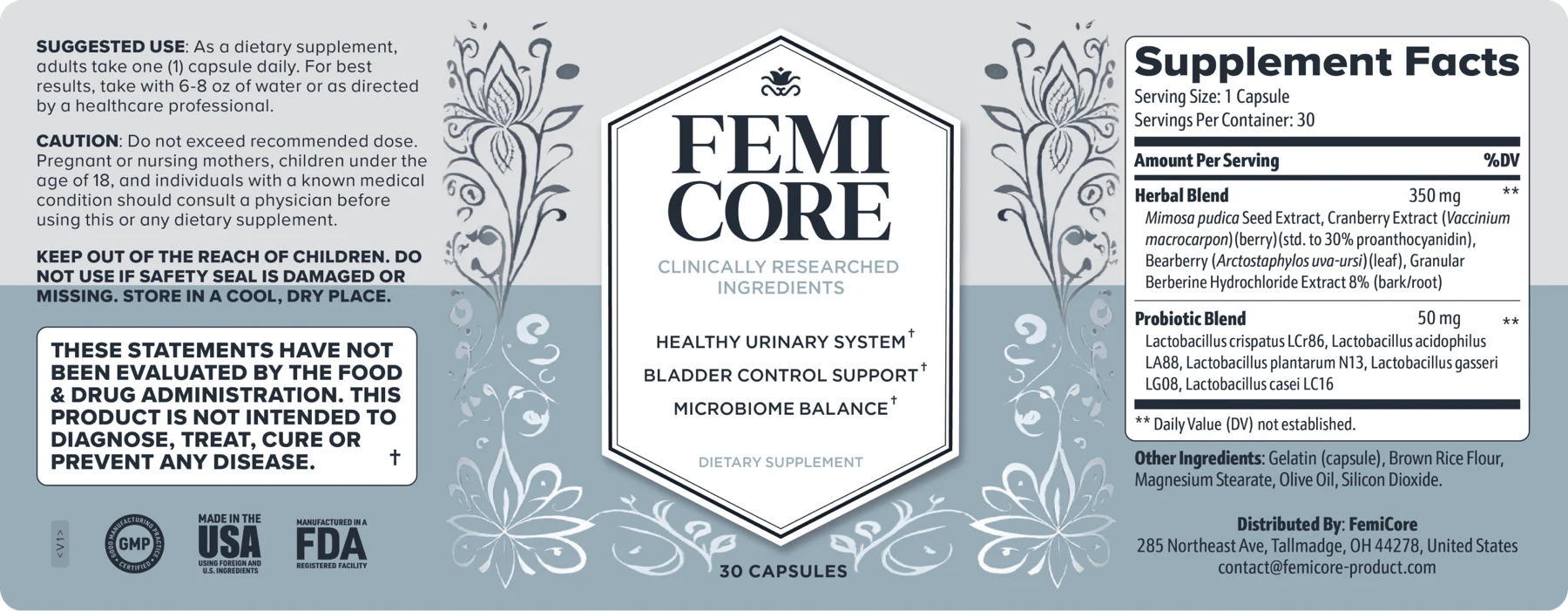
The supplied label was byte-for-byte identical to the image hosted on the seller page on September 25, 2026. This does not verify a delivered physical batch. The affiliate redirect was checked and reached getfemicore.com on September 25, 2026. Rendered seller package totals were also checked; a payment checkout was not completed. Conflicting shipping statements are identified on the shipping page.
Public health and ingredient resources
- FDA: Dietary supplements
- NIDDK: Treatment of bladder control problems
- NIDDK: Symptoms and causes of bladder control problems
- NIDDK: Diagnosis of bladder control problems
- MedlinePlus: Urinary incontinence products — self-care
- MedlinePlus: Skin care and incontinence
- NIDDK: Kegel exercises
- NIDDK: Bladder infection symptoms in adults
- NCCIH: Cranberry — usefulness and safety
- NCCIH: Berberine research and safety
- NIH ODS: Probiotics fact sheet
- EMA: Bearberry leaf assessment
Research papers used for evidence interpretation
- PubMed: Mimosa pudica root extract study in rats
- Pearce et al., 2014: Female urinary microbiome and urgency incontinence
The Mimosa paper is animal research using a different plant part. The microbiome paper examines an association. Neither is a trial of FEMICORE.
How to follow a citation
Individual pages link statements to their source notes. Read the source in context and compare the population, preparation, route, and outcome with the claim. The existence of a reference alone does not make a claim valid.